
Certification
Overview of certification
CASC/ACSS Certified professionals practice with integrity and accountability. Certification is in accordance with the CASC/ACSS Code of Ethics and Professional Conduct, and the CASC/ACSS Standards of Practice. Practice is informed by a holistic understanding of human life as physical, emotional, mental and spiritual.


CASC/ACSS Certified Professionals
- Respect the rich diversity of life and understandings of religion and spirituality.
- Engage in consultations and referrals with other professional colleagues, groups or organizations.
- Engage in ongoing professional development, self-assessment, critical analysis and research.
- Are required to participate in a minimum of 50 hours of personal and professional development annually.
- Stay aware of best practices within the disciplines and integrate those practices into daily work.
CASC/ACSS Certifies three types of professionals
Certified Spiritual Care Practitioners
- Seeks to improve the quality of life for individuals and groups experiencing spiritual, moral and existential distress related to changes in health, maturation, ability and life circumstances.
- Attends to an individual’s beliefs, values, behaviours, spirituality and culture to promote meaning and wholeness.
- Implements a holistic and relational approach to assess and treat the nature of the presenting issues.
- Delivers compassionate care to individuals, families and professional staff, honouring their diverse backgrounds and perspectives.
Certified Psychospiritual therapists
- Integrates spirituality, psycho-education, mental health, wellness, religion, pathology and human development.
- Assesses and treats cognitive, emotional, spiritual, behavioural, and developmental disturbances across all stages of the life span.
- Collaborates with individuals, families, communities and organizations to promote healing and wholeness.
Certified Supervisor-Educators
A Certified Supervisor Educator is a Certified Spiritual Care Practitioner or Certified Psychospiritual Therapist who has demonstrated supervisory competence in the field of Supervised Psychospiritual Education (SPE) and is able to conduct SPE programs in keeping with the standards of CASC/ACSS. A Certified Supervisor Educator:
- Designs, implements and oversees SPE internships, that are consistent with CASC/ACSS Competencies, Standards of Practice, Scope of Practice and the Code of Ethics.
- Demonstrates strong knowledge of theories related to supervision drawn from adult education, behavioural sciences and professional ethics.
- Assesses and engages students in a way that promotes clinical learning, self awareness, and competence in their chosen field.
Academic Requirements
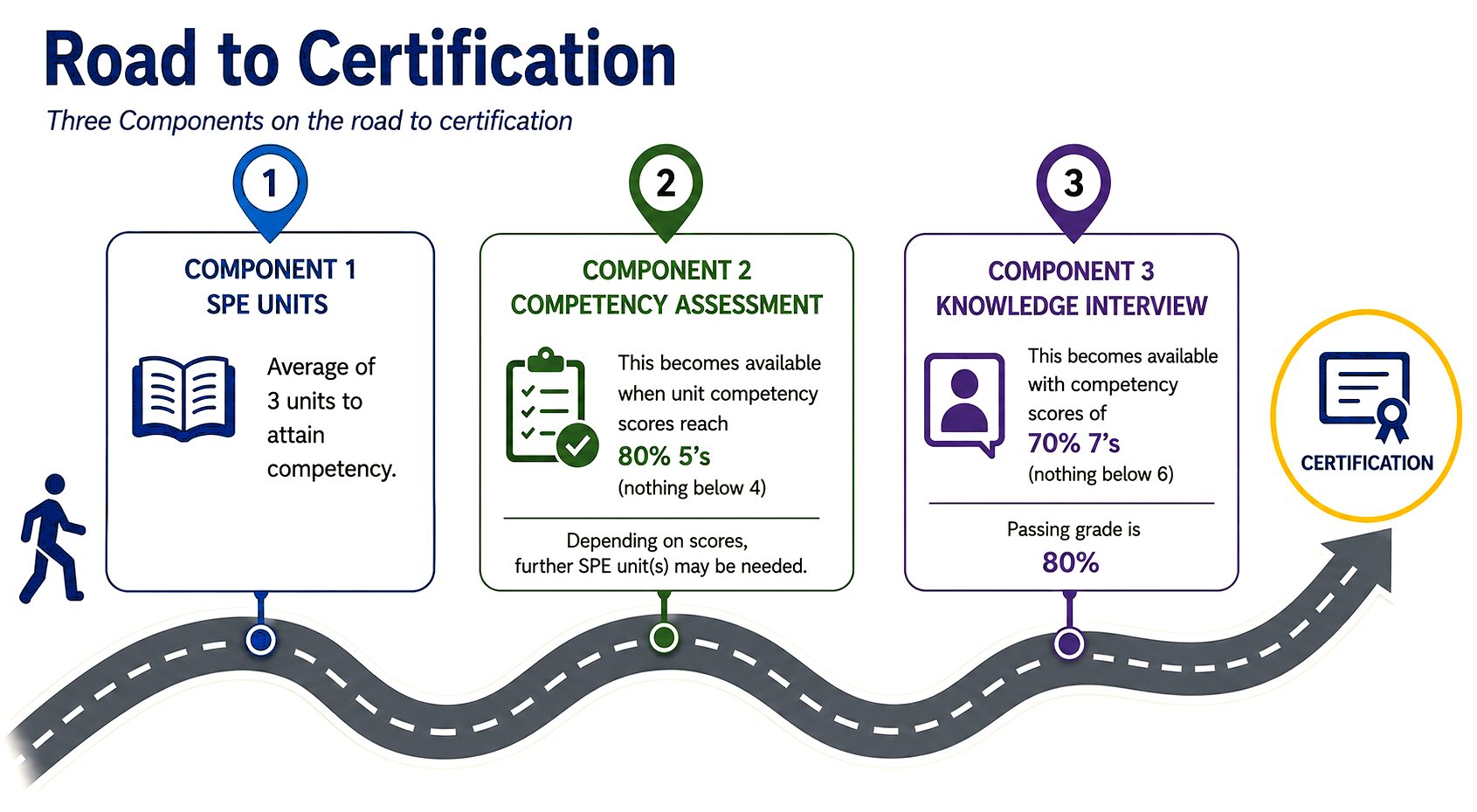
Those wishing to apply for Certification have completed four (4) units of Supervised Psychospiritual Education (SPE), a Competency Assessment, a 2 year graduate/master’s degree in theology or related field that includes certain prerequisite courses, and professional papers that demonstrate the competencies of CASC/ACSS Certified Professionals.

Peer Review
Certified Members go through Peer review every five years in order to maintain certification. They demonstrate 50 hours per year of personal and professional development, update their training on the Code of Ethics, and present evidence of current spiritual pracctices. They meet with two other certified members to review learnings of the past five years and discuss their plan for future development and new areas of growth. Certified Members are committed to life long learning in their chosen field of expertise.
FAQS
Do I have to be certified to become a Member?
No. Certification is one of 6 types of Membership in CASC/ACSS: 1) Student, 2) Associate 3)Qualifying 4) Certified 5) Emeritus Certified 6) Emeritus.
Am I certified after a unit of SPE?
No. One receives a “Certificate” of completion after 1 unit of SPE. It takes 2 Foundational (basic) and 2 Integrative and Contextual (advanced) units of SPE before one is eligible to apply for certification.
Do I need a degree to be certified?
- Yes, normally a Masters of Divinity, an MA in Theology or a related degree is required for certification. If there is any question about one’s academic background or degree, the Academic Assessment Committee can provide helpful advice. Please contact the Educational Standards Commission chair at education@spiritualcare.ca or by clicking here.
Why should I become certified?
Certification is the highest level of education and training for Spiritual Care Practitioners and Psychospiritual Therapists. It demonstrates a commitment to the highest ethical standards and accountability, best practice and ongoing professional development. It ensures that the member has met the rigorous requirements for professional training, and attained a recognized degree of proficiency and competency in their chosen field of specialization. Certification also demonstrates a commitment to the discipline of Spiritual Care and Psychospiritual Therapy and a desire to advance the professional interests of their colleagues and peers. Certification is also a requirement of regulatory colleges and associations.
How much does Certification cost?
Please see the Membership page for current yearly fees for the various membership categories. Currently Certified Members pay $350 per year. The one time fee to apply for certification is $350.00.
How long does Certification take?
If one already has a graduate degree in theology or a related field, It is possible to take all the training required (Foundational, Integrative adn Contextual units of SPE) in a year. This would involve a SPE residency program. The required hours of supervised clinical experience needed before one can apply for certification could take further months, depending on whether one is working/volunteering full or part time.
If one is taking 1 SPE unit per year, it may take from 3 to 5 or more years to become ready for certification.
What is the difference between certified and other member types?
- Students are any person taking a course in Supervised Psychospiritual Education or Supervisory Education.
- Associate Members are any Members who are not yet certified. They can have zero to 5 or 6 units of Foundational (Basic) and Integrative and Contextual (Advanced) SPE education.
- Qualifying Members have completed their SPE training and are preparing for certification.
- Certified Members have successfully completed their Foundational (Basic) Integrative and Contextual (Advanced) units of SPE, a graduate degree in Theology or related field, and successfully completed the Certification process (writing papers and interview). They complete a peer review every five years.
- Emeritus Certified Members are no longer earning renumeration from the practice of Spiritual Care, Psychospiritual Therapy or Supervisory Education, and wish to sit on CASC/ACSS committees and serve the membership.
- Emeritus Members are no longer earning renumeration from the practice of Spiritual Care, Psychospiritual Therapy or Supervisory Education.
Who is responsible for Certification?
The Professional Practice Commission (PPC) deals with all aspects of a member’s professional practice outside of education and ethics. They advocate for members in areas of employment and hiring, scope of practice, standards of practice and ongoing professional development and education. PPC updates and manages the certification process and oversees peer review for certified Members.
The Education Standards Commission (ESC) is responsible for the proper running and accrediting of educational courses and training programs. ESC oversees the admission into foundational and Integrative SPE as well as Supervisory Education.
Once a person has completed their education, they are supported by the PPC. If a person is working and completing their professional Education, they are under both PPC and ESC. For more information about the PPC, visit the Commissions page here.
HOW TO APPLY
You must be a Member with CASC/ACSS to apply for Certification.
Join CASC/ACSS today to gain access to our members-only portal where you can find detailed information on the application process toward Certification.